
How nice it would be to just revert to what could be a violent and criminal government. Like that. In one day, just replace the government with another one. To just get rid of that group of politicians.
Unfortunately, it is not that easy, of course. For some analysts (see Dario Fabbri, for the Italian folks reading this), the reason is a theoretical premise and assumption in conducting geopolitical analysis: the government is always the product of its community. Trump is the product of America. Putin is the product of the Russian people. Leaders are insignificant; what matters are the people, the communities. Within geopolitics, this approach translates into (intentionally) overlooking the intentions and, for instance, speeches of the leaders, while focusing on the people. Within the philosophy of history, we might say that the people are the drivers of history. In that sense, just replacing the government (product) will not address the root cause (communities).
Now. I do acknowledge that we could discuss a lot on that. However, I recently wrote an analysis where I discussed, among other things, how the relation between Ethiopia and Eritrea could develop, and this theoretical approach came to my mind. This blog post works for my learning curve.
The case of Ethiopia
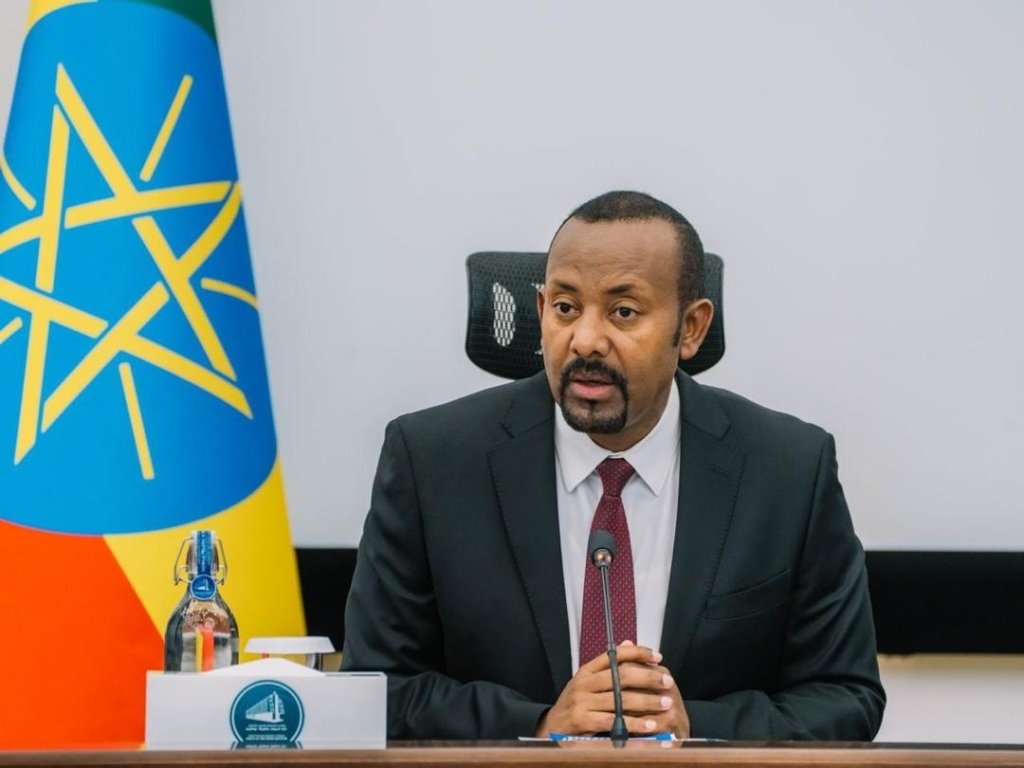
Looking into the recent history of Ethiopia, there have been huge changes in the last years. In 2018, Abhiy Ahmed Ali was elected as the current prime minister. One year later, he even won the Nobel Peace Prize for having calmed the relations with Eritrea, and just another year later, in 2020, he agreed to engage in a military conflict in the Tigray region of Ethiopia. In this region, he was fighting a paramilitary group known as the Tigray People’s Liberation Front (TPFL).
It was thought that Abhiy Ahmed had found a solution with Eritrea in 2018, but the roots of their problems were much deeper, and a quick agreement did not really solve the situation. Abhiy Ahmed became the prime minister, but this group, the TPFL, which has a very different political idea and vision compared to the prime minister, got sidelined from the government. So he got elected, representing Ethiopia as united, sharing the vision of a central government, but the reality of Ethiopia was fragmented, and the idea of ethnic-based divisions was supported, for example, by the TPLF – Tigrarians want more independence.
My basic thought is that it seemed great, Abhiy Ahmed as a prime minister, and people believed so – otherwise he would not have won the prize. It was believed that you could end hostilities that lasted for decades (between Ethiopia and Eritrea) with just a new government. On the international stage (from the outside), we could say, the aspect of Ethiopia was very different from its domestic reality.
What this situation teaches me is to be skeptical about quick changes in politics. While writing this blog post, the initial idea was to compare the case of Ethiopia with the case of Austria in the post-WWII context. I realized, however, that the latter case was not really comparable. Basically, what happened is that Austria, within the international scenario, played the role of the innocent at the end of the war. I read that during my master’s, in a paper that was about international diplomacy and the use of memory. The case of Austria was presented, among others. The political leaders of Austria were questioned, and they portrayed Austria as the “first victim of nazism”. The narrative was aimed at avoiding sanctions. However, at the same time, the Austrian domestic situation was very different. Many Austrians collaborated with the Nazis. Austria even paid Israel to get acknowledgment of its independence, and the US supported the innocence narrative to avoid claims from the Soviet Union.
I think that this example, in general, does not have a lot to do with the case of Ethiopia. As an aspiring analyst, the only thing in common that I get from the two cases is to always pay attention to the international sphere as much as the domestic one. In both, a kind of mismatch happened. Back to the theory I mentioned in the opening, I think it can indeed be useful to focus on the communities and their feelings, so to speak, as a starting point for an analysis.
In conclusion, to just speculate on the topic, I just wonder about the measure of time needed for real political changes. It feels more of a “human-based” time, for instance, tied to (collective) memory.
 Daniele Balducci
Lascia un commento