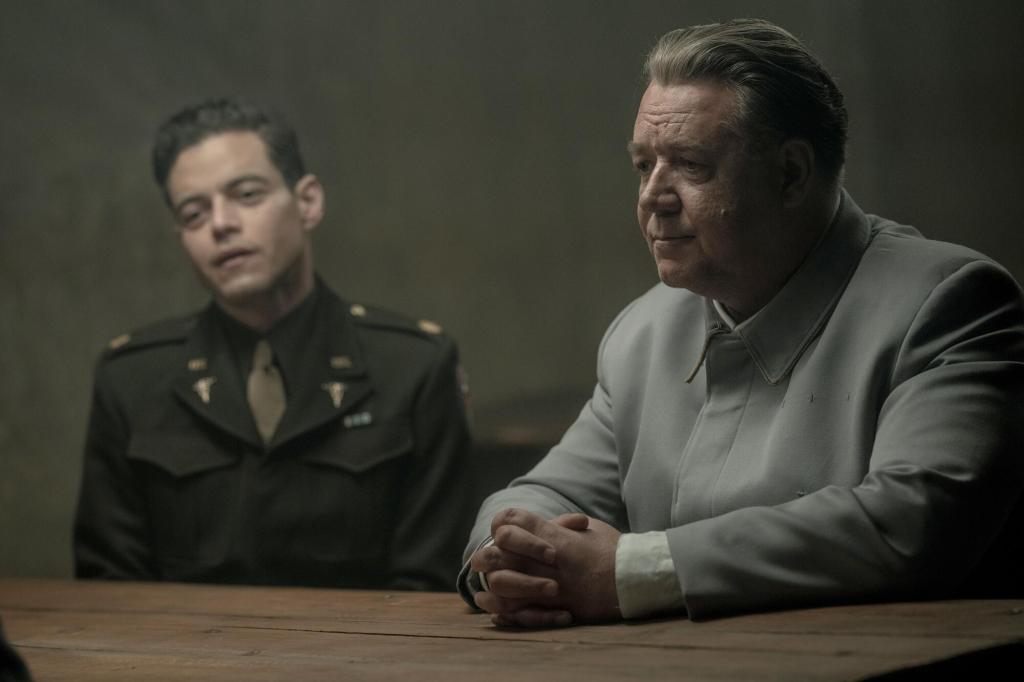
A few weeks ago, I went to the cinema to watch the new movie Nuremberg, directed by James Vanderbilt, with Russel Crowe and Rami Malek, among others.
In this blog post, I wanted to share my review of the movie, which is a critical consideration of the mere historical narrative depicted in the movie – no thoughts on acting or anything else.
My point is: the historical narrative of the movie is problematic, as it depicts Americans as the “heroes of justice”. Meaning that they represented Justice in the movie. As if it were a celebration of the American role in the post-World War II context.
In the movie, there is the fear Nazis could escape accusation. Lawyers are worried they could avoid justice. Indeed, the peak moment of tension in the movie is when Göring is reading his communications in the courtroom. When he replies to the American lawyer, arguing that there was no intention to kill the jews and he discusses the use of words – ‘emigration’, not ‘extermination’. This latter point about the statements of Goring is crucial, as I think the movie doesn’t discuss the notion of intention and many other historical aspects.
First, the use of a specific word (such as extermination) was not necessary. The historical context is the birth of an international order based on international law, the end of World War II. This international law was written by the winners of the war – the US, among others. The notions of genocide, crimes against humanity, and crimes against humankind were tailored for the Holocaust. The winners were colonial powers who wanted to punish Germany without having repercussions for their own past actions. In that sense, these notions were tailored, on purpose, to punish the nazis. Therefore, there was no doubt they would have achieved their goal. This “tension” did not exist. It was very clear that the Nazis would have been condemned.
In the notion of genocide, in particular, the concept of intentionality is present. This is still discussed nowadays. You don’t need the explicit use of a word or an explicit statement to find someone guilty. You can infer their intentions – it is difficult to prove someone’s intentions, though, that’s why it is still discussed. In the movie, there is no trace or explanation of this huge transformation in international law/order.
Secondly, the trial was orchestrated. Besides the writing of international law, it’s the first trial in history where a documentary was shown. Recordings allowed. The courtroom was restructured to let the press in. In a few words: the trial was sensationalized, and there was no doubt that the winners would have judged the nazis, but this is not shown in the movie. There was no way Goring could have managed to look innocent.
That said, I want to conclude by saying that I do acknowledge that my review is quite arguable. As is said in the movie, they wanted to ensure that people would not treat Nazis as martyrs. And also because the movie is more focused on the perspective of the psychiatrist – rather than having more of a historical facts-driven narrative.
I know I’ve been short in the post. I just wanted to present my ideas about the movie. I work full-time, and I couldn’t put all the references and elaborate more. I’m sorry. Also, I know that no one will read this, but never mind. If you are reading this and you want to express your opinion on that, feel free to leave a comment. In addition, if you’re interested, I can provide academic references for what I’m saying (international rules tailored for the case and spectacularization of the case).
 Daniele Balducci
Lascia un commento